


General Information
Chania
Chania is built on the site of ancient Kidonia. Old City is surrounded by the renowned Venetian walls of the 15th century, which are a representative piece of the Venetian architecture.
Old Venetian buildings, beautifully renovated fascinate you with the magic of the era and make you travel back in time. Narrow streets lead you among the Venetian and Turkish buildings, indicating the passage of the conquerors. The old harbour with its long Venetian pier and the lighthouse remind the years that Chania were a big commercial city
Rethymno
The Venetian fortress ‘Fortezza’ overlooks the old city and the mosques alternate with the Christian churches. The old city is surrounded by a pleasant drive that starts from the old port, goes around Fortezza and leads to the neo-classic building of the Prefecture.
The old part of the city of Rethymno, the so-called ‘old city’, has been built over the ruins of the ancient city Rithymna, from which stems the contemporary name of the city.
Heraklio
According to Stravonas, the new city is on the site of one of the seaports of Knossos called Herakleia. This name was maintained during the Roman and Byzantine Period However, the main history of the city begins in 824 AD after the occupation of Crete by the Arabs. They fortified it by forceful walls and by digging a big moat around them. Due to this moat, which in the Arabic language is called Chaidac, it was renamed by the Arabs this name was kept until the 19th century
Lasithi
The prefecture of Lasithi is located at the eastern part of the island.
As far as the origin of its name is concerned, there are several versions, however the most possible are the following: the one that mentions the town of Sitia, as the Venetian conquerors wrote it as La Sitti and it is supported by Paul Favre, and the other version that mentions the ancient Greek word “lasios”, which means a verdant place.
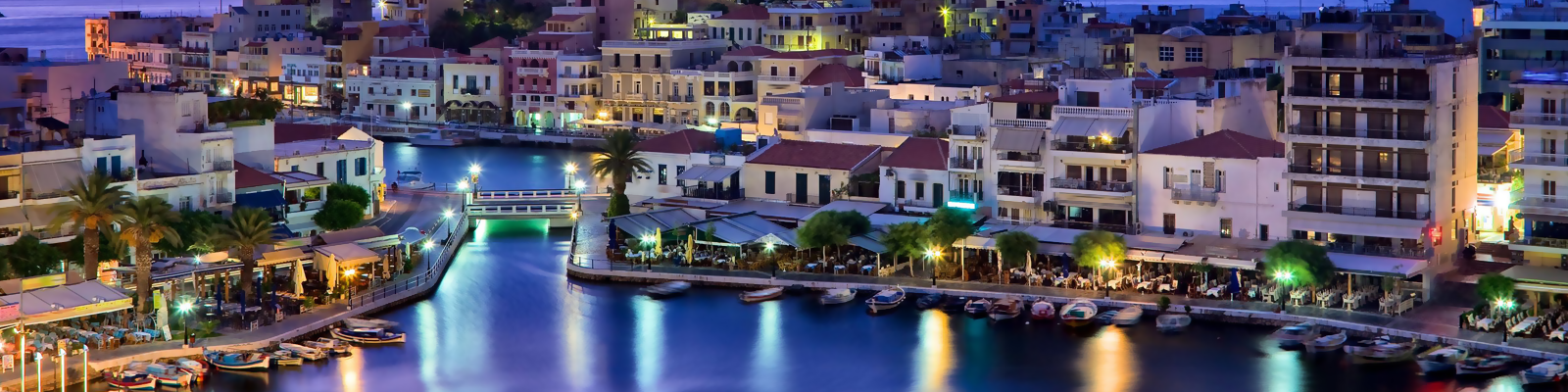
Agios Nickolaos is its capital with its small harbour constructed round a deep bay.